The Paradox of the Lipid Bilayer Membrane Doctrine“The fact that cholesterol strengthens cells and protects them from breaking down under stress obviously has nothing to do with a lipid bilayer membrane. This membrane doctrine has paradoxically made it seem that the loss of cholesterol should make cells stiffer while simultaneously weakening them. Gilbert Ling pointed out the numerous paradoxes faced by proponents of the lipid boundary membrane for 65 years, but the membrane doctrine continues …” September 2018 – Ray Peat's Newsletter |
Assessment of Science in Ling’s Time“I don’t believe one can think about Gilbert Ling’s work (which began in the 1940s) without evaluating how the science industry operated at that time – at least in the USA and England. Science has its rules, but they don’t apply when the prevailing ideology or paradigm is challenged.” March 2020 – Ray Peat's Newsletter |
Ling’s Concept of the Living State Challenges Conventions“For many years, the scientific culture in the USA at times condemned holism, intentionality, consciousness, epigenetics, self-organization, and self-regulation – along with vitalism – as unscientific and superstitious. In the 1960s, Gilbert Ling’s idea of a living state had echoes of holism and self-regulation, but one of the most offensive things about it was that it proposed explaining all biological processes using known physical laws and principles of physical chemistry.” March 2020 – Ray Peat's Newsletter |
Active Transport and the Role of ATP in Cells“The membrane theory states that the process of accumulating a substance against its concentration gradient is active transport and requires the use of ATP. Experiments by Ling and others showed that the energy metabolism of cells could be poisoned so that no ATP was produced, yet the cells still maintained their ion gradient, even though sodium could freely diffuse through the membrane into the cell. All ATP has to do is be present and passively occupy its place in the cell.” March 2020 – Ray Peat's Newsletter |
Ling’s View on the Binding Energy of ATP“Since Ling did not assume that the binding energy of ATP is continuously consumed to operate membrane-bound sodium pumps, he was not concerned with the energy that could be released by hydrolysis of this bond. Like Albert Szent-Györgyi, he was aware that the ATP molecule adsorbs to protein molecules with considerable energy and that its presence determines the shape of the protein molecule.” March 2020 – Ray Peat's Newsletter |
Ling’s Concept of the Living State“The picture of the living state of matter that Ling had outlined was now surrounded by a rich landscape of information – about colloids, gels, coacervates, liquid crystals, nanoscale surface effects, self-organization, and membraneless organelles.” March 2020 – Ray Peat's Newsletter |
The Influence of CO₂ on Muscle Contraction and Brain Blood Flow“In the 1950s, Gilbert Ling noticed that at elevated carbon dioxide levels, a given stimulus causes less contraction of a muscle than at lower carbon dioxide concentrations. Around the same time, Russian physiologists found that CO₂ produced by active brain cells relaxes the blood vessels in the brain – including capillaries – and increases blood flow relative to rising metabolic demands.” March 2020 – Ray Peat's Newsletter |
Protein Interactions and the Influence of Cardinal Adsorbents“Anything that binds to a protein – like potassium or ammonium – has an inductive effect on the protein’s structure and its interactions with its environment; and substances that strongly adsorb, especially ATP and steroids, strongly influence the properties of the system. Molecules that bind strongly to proteins change the way proteins affect the properties of water, and the properties of water control the metabolism of cells as well as their interactions with each other and the environment. Ling called these influential binding molecules cardinal adsorbents.” March 2020 – Ray Peat's Newsletter |
Holistic Interactions of Metabolic Energy and Structure in Health and Cancer“In the 1960s, at the height of the membrane hype, Otto Warburg, Albert Szent-Györgyi, and Gilbert Ling were ridiculed when they described the difference between health and cancer in terms of holistic interactions of metabolic energy and structure. Many of their fundamental discoveries are now individually recognized, but within the framework of the mechanical membrane/pump/receptor doctrine, their significance is inaccessible.” March 2020 – Ray Peat's Newsletter |
Cell Organization and the Influence of Energy on Protein Solubility“Many of the new observations related to viewing cells as self-organizing coacervate systems recall Gilbert Ling’s observations. For example, ATP increases the solubility of proteins (Patel et al., 2017), and when energy is scarce, some proteins precipitate out of solution and form membraneless organelles, filaments, and granules.” January 2021 – Ray Peat's Newsletter |
Limiting Effect of Carbon Dioxide on Overexcitation of Nerves and Muscles“Carbon dioxide limits the electrical depolarization of nerves and muscles – a phenomenon first discovered by Gilbert Ling. This prevents overexcitation and exhaustion of brain and muscle cells, including the heart. The presence of carbon dioxide limits the formation of lactic acid. This explains the lactate paradox during physical exertion at high altitude.” December 1999 – Ray Peat's Newsletter |
Insights from Decades of Research in Cell Physiology“In 1968 or 1969, I had read the previous 50 years of research in cell physiology, and I saw that Gilbert Ling had been almost alone for over 20 years in offering a view of the cell that was physically possible.” 1998 – Ray Peat's Newsletter – 4 |
Criticism of Today’s Scientific Culture in Cell Research“I have seen articles in major scientific journals drawing important conclusions from the non-existent positive charge supposedly on the outside of cells – and this has passed editors and reviewers because these ideas are so common in our scientific culture. Less obvious but equally false notions are even more widespread. The use of various microelectrode techniques has provided a wealth of information about cellular electrical responses, but – except for the work of Gilbert Ling and a few others – the significance of the data is obscured by a huge culture of fantasy theories.” 1998 – Ray Peat's Newsletter – 2 |
Ray Peat on Gilbert Ling
Supplements according to Ray Peat
-
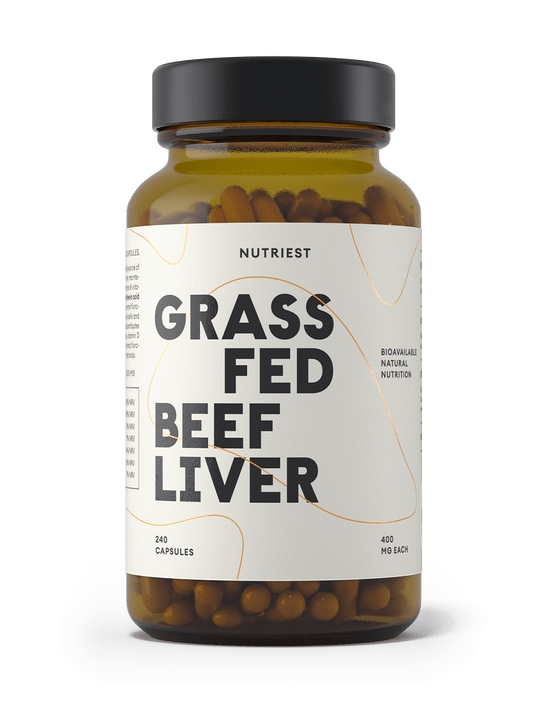
Beef Liver Capsules in Premium Quality
Normal price €44,99 EURNormal priceBase price for€42,99 EURSales price €44,99 EUR -
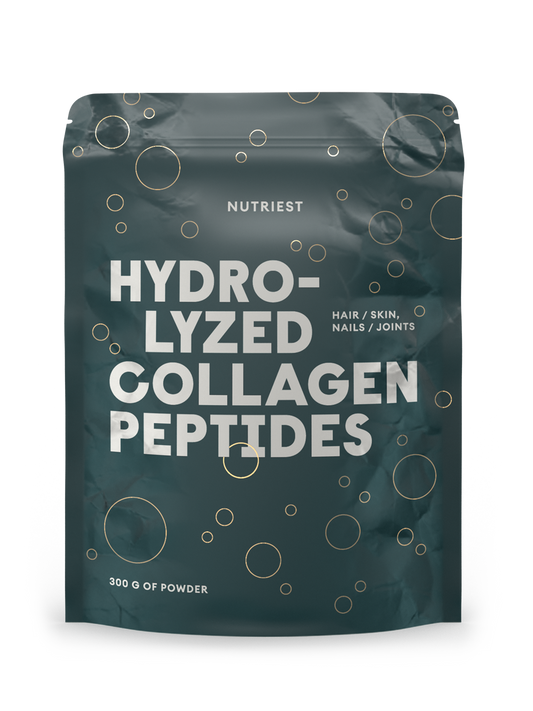
Hydrolyzed Collagen Powder from Pasture-Raised Beef
Normal price €29,99 EURNormal priceBase price for€27,99 EURSales price €29,99 EUR -
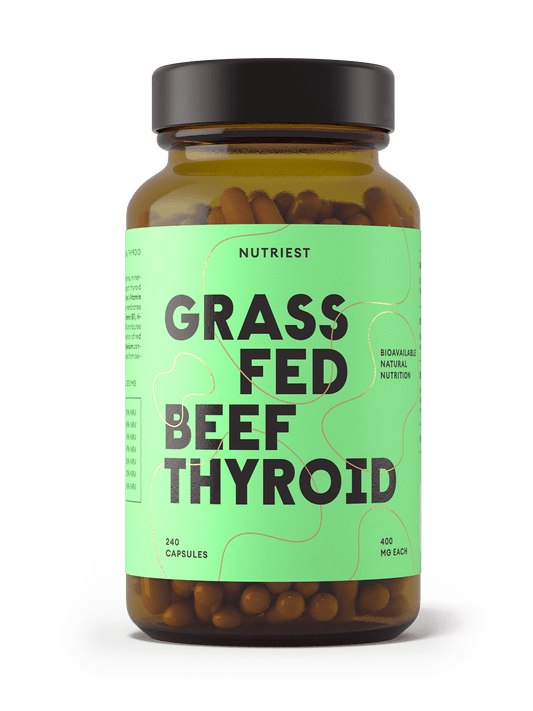
Dried Organic Pasture-Raised Beef Thyroid in Capsules
Normal price €59,99 EURNormal priceBase price for€47,99 EURSales price €59,99 EUR -
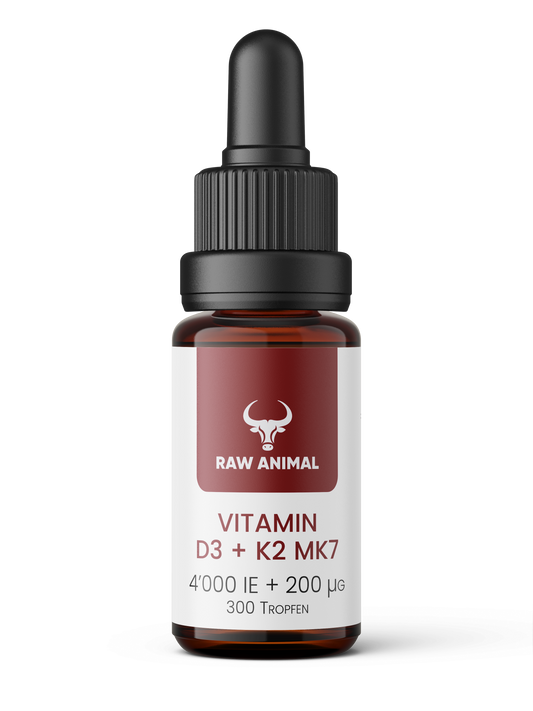
Vitamin D3 + K2 MK7 - 4000 IU + 200 µg Drops
Normal price €19,90 EURNormal priceBase price for€19,90 EURSales price €19,90 EUR