Jump to product information
1 by 1
Auf Lager - in 3 bis 5 Tagen bei Dir

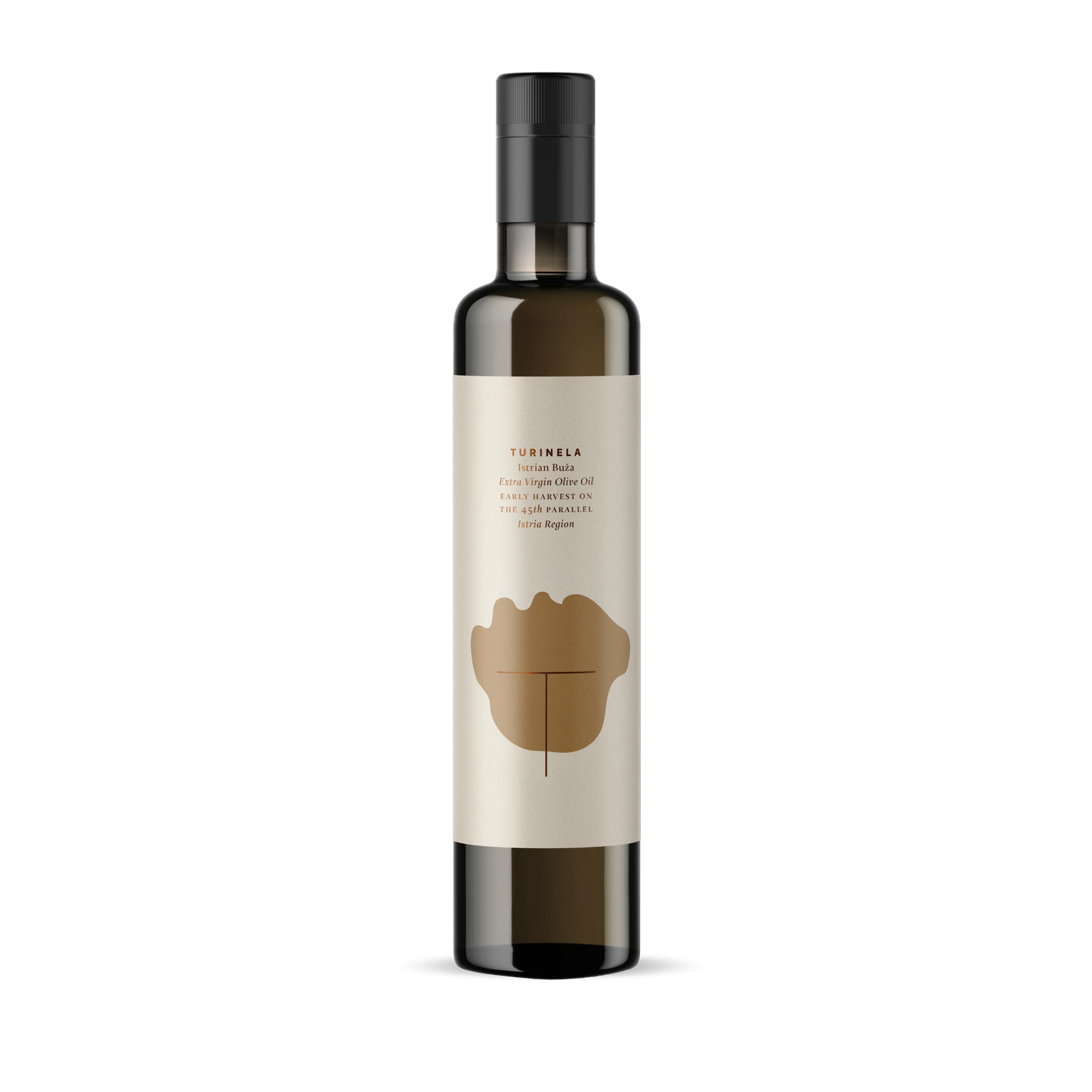
Turinela Extra Virgin Olive Oil Buža – Native Istrian Variety, 500 ml

Native variety: Buža is at home in Istria and hard to find anywhere else
Bitter with a long, fruity finish: the boldest oil in our range
Award-winning olive oil: 6 gold medals at the NYIOOC World Olive Oil Competition
PayPal payment icon Klarna payment icon Visa payment icon Mastercard payment icon Apple Pay payment icon Google Pay payment icon Twint payment icon
Show full details

Know your variety

What is Buža?

Buža is a native olive variety of Istria. “Native” (autochthonous) means it originated in the region and was not brought in from elsewhere. That makes it the counterpart to imported varieties such as Leccino or Frantoio, which come from Italy. In practice, the name covers a group of related local types that developed over centuries in different parts of Istria; the most widespread are Buža, Buža puntoža and Vodnjanska buža. What they share is a high tolerance of drought and an oil with pronounced bitterness and a long finish.

In Croatia, Buža is seen as the leading variety of Istrian olive oil culture, and a large share of the Istrian oils that are judged internationally contain it.

Comparison: Our Products and Standard Preparations
Extra Virgin Olive Oil Buža – Native Istrian Variety, 500 ml
Cheap supermarket olive oil
Origin:
One family estate, a single field in Istria
“Blend of olive oils of European Union origin” – several countries, no single site, no character
Varieties:
Buža, native Istrian variety
Not stated
Harvest year:
2025, stated on the label
Not stated – this information is voluntary
Acidity:
0.10 %, tested
Limit 0.80 %, actual value not published
Peroxide value:
2.3, tested
Limit 20.0, actual value not published
Extraction:
Cold extracted, below 27 °C
Usually not stated

Information about Extra Virgin Olive Oil Buža – Native Istrian Variety, 500 ml

About the product

Istrian olive oil from a native variety: why it is different

A variety that originated in one place has adapted to its conditions over a very long time: to the soil, the rainfall, the wind and the frost line. For Buža, that means poor limestone ground with an iron-rich red topsoil and a climate that is dry in summer and can turn cold in winter. That harshness is exactly what you find in the oil. Bitterness and pepperiness are the expression of the protective compounds the fruit produces. They are not a side effect but the very hallmark of the variety.

Bitter olive oil: how to read bitterness

Many people think a bitter olive oil is faulty. In the official sensory assessment of extra virgin olive oil, the opposite is true: fruity, bitter and pungent are the three positive attributes that are assessed. Bitterness develops in freshly made oil from fruit that was not picked overripe. An oil with no bitterness at all was either made from very ripe fruit or is no longer young. What would actually be a defect are other notes: rancid, winey-vinegary, musty, metallic.

Frequently Asked Questions (FAQ)

What is Buža olive oil?

An oil made from Buža, a native Istrian olive variety. Native means the variety originated in the region and was not introduced from elsewhere. In Croatia it is regarded as the leading variety of Istrian olive oil culture, and it gives an oil with pronounced bitterness and a long, fruity finish.

How do you spell and pronounce Buža?

Correctly with a háček on the z: Buža, pronounced roughly “BOO-zhah”. Outside Croatia you will often see the simplified spelling Buza.

Why is olive oil bitter – and is that a bad sign?

No. In the official sensory assessment, bitterness is a positive attribute, alongside fruity and pungent. It indicates fresh oil from fruit that was not overripe. Real defects taste different: rancid, musty or winey-vinegary.

What goes well with a bitter, peppery olive oil?

Dishes with character of their own: pulses, lentil and bean soups, braised or grilled meat, winter vegetables and strong hard cheese. For tender leaf salads, a milder, fruitier oil is the better choice.

Is this a single-variety olive oil?

Yes. This oil comes from a single Buža field on the estate.

What does olive oil acidity mean?

It measures the proportion of free fatty acids and shows how carefully the olives were harvested and how quickly they were processed. Extra virgin olive oil may have up to 0.80 %. This oil is at 0.10 %, about eight times below the limit.

What is the peroxide value of olive oil?

It shows how far oxidation has progressed. Up to 20.0 mEq O₂/kg is permitted; this oil is at 2.3. Low values point to fresh, careful processing.

Is this olive oil cold extracted?

Yes. The term is defined by law and may only be used if the oil is obtained below 27 °C by centrifugation or percolation, without any heat that would alter the aromas.

What sizes is this olive oil available in?

Only in the 500 ml bottle.

We take your health seriously

We are all unique, and we each have our own health goals.

We have tried to cover most of the health concerns in our society and have identified the following key areas:

  • More energy & less exhaustion in daily life
  • Become stronger, more resilient, and more capable
  • Bring skin, hair, and nails to a natural glow
  • Balance digestion & gut health
  • Strengthen the immune system naturally
  • Improve hormones, libido & vitality
  • Targeted nourishment for bones, joints, and connective tissue

Based on this, we have created a free 25-30 page PDF guide for each topic just for you. No gimmicks, just real, valuable, and effective tips and tricks.

Now to the guide form
Extra Virgin Olive Oil Buža – Native Istrian Variety, 500 ml
€29,00